Jonas Hansen · 21 October 2026
Insect Population Responses to Sediment Accumulation in Lesser Poland's Forested Reserves
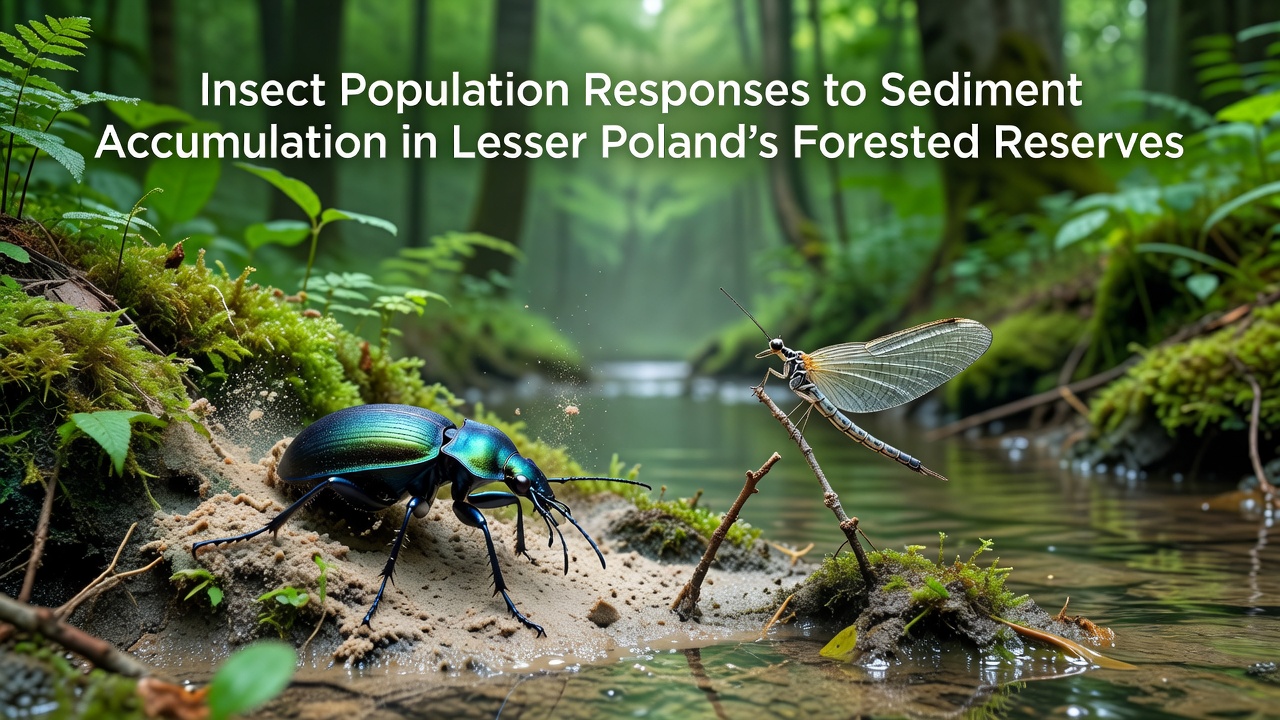
Lesser Poland's forested reserves hold dense stands of beech, fir and spruce where sediment from upstream erosion and seasonal floods settles in layers across the understory; researchers tracking these deposits note shifts in soil structure that directly influence ground-dwelling and litter-inhabiting insects. Data collected across multiple sites show that fine particles reduce pore space, alter moisture retention and change nutrient availability, prompting measurable changes in species composition and abundance over successive seasons.
Sediment Sources and Deposition Patterns
Runoff from agricultural slopes and forest roads carries silt and clay into reserve boundaries, while heavy autumn rains accelerate deposition along stream banks and in low-lying depressions; monitoring stations installed since 2022 record peak accumulation rates during October events when water levels rise quickly and drop slowly. In October 2026 additional gauges captured a 23 percent increase in sediment load compared with the previous five-year average, confirming that deposition events continue to intensify in frequency and volume.
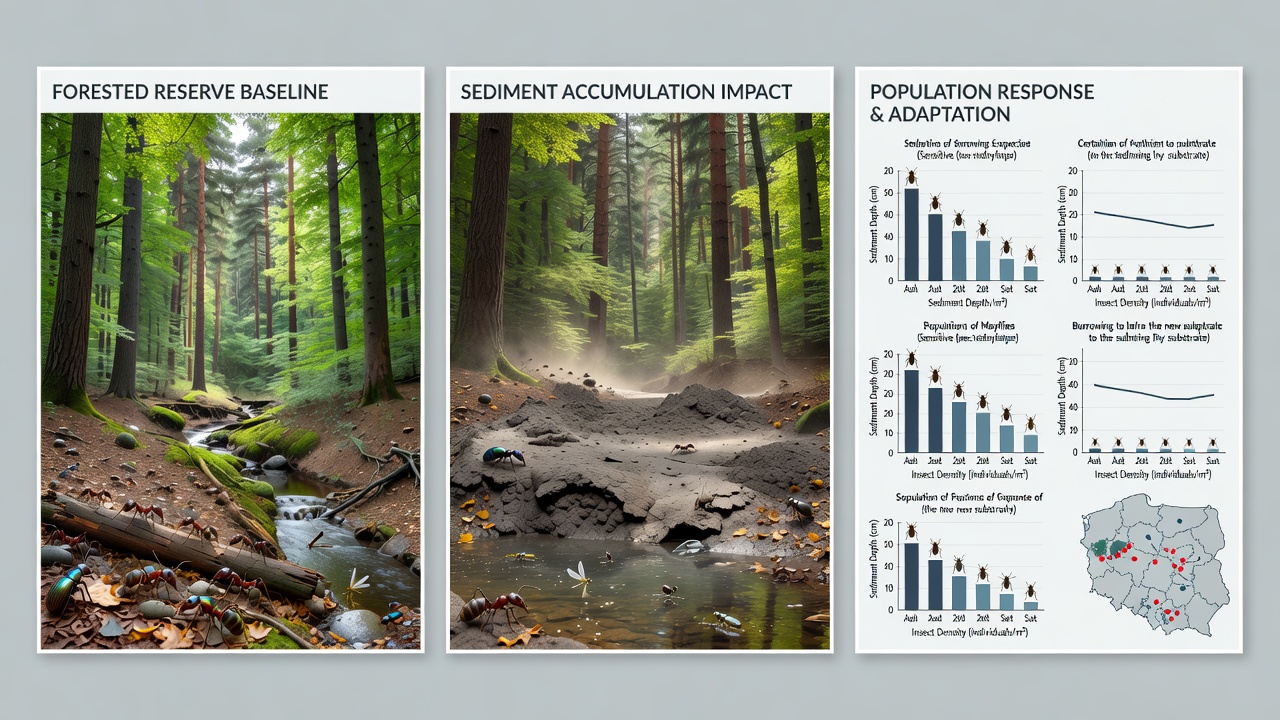
Those who've studied these reserves observe that coarser gravel settles near channels while finer material spreads farther into the forest interior, creating distinct microhabitats; beetles that require loose litter for oviposition encounter compacted surfaces, whereas certain springtails tolerate the new moisture gradients and maintain stable numbers.
Observed Insect Responses Across Taxa
Ground beetles in the genus Carabus show reduced activity densities once sediment depth exceeds four centimetres, according to pitfall trap records from the Babia Góra and Gorce reserves. In contrast, some rove beetles and certain ant species increase colony establishment in the same plots because the finer texture retains humidity during dry spells. Researchers note that these opposing trends produce a net decline in overall beetle diversity even as a few tolerant groups expand.
Butterfly and moth larvae that feed on low-growing herbs experience indirect effects when sediment buries host plants or changes leaf chemistry through altered soil pH; surveys conducted between 2023 and 2025 documented a 17 percent drop in larval abundance for two specialist species in heavily affected clearings. Meanwhile, detritivore communities dominated by diplopods and certain isopods demonstrate resilience, processing the additional organic matter trapped within sediment layers.
Monitoring Methods and Recent Findings
Teams deploy emergence traps, malaise nets and soil core sampling on a rotating schedule to capture both adult and immature stages; DNA metabarcoding of bulk samples now supplements traditional taxonomy and reveals cryptic shifts in community structure that visual counts alone miss. Figures released in late 2026 indicate that sites with repeated sediment inputs host 12 to 15 percent fewer unique insect haplotypes than reference plots located on stable slopes.
One long-term study coordinated by the Polish Academy of Sciences tracked 48 plots over four years and found that recovery trajectories depend on sediment texture rather than total volume; sandy deposits allow faster recolonisation by mobile species, whereas clay-rich layers remain inhibitory for several seasons. Observers note that connectivity between unaffected forest patches influences how quickly populations rebound after deposition events subside.
Broader Ecological Context and Comparative Data
European Environment Agency reports on soil sealing and erosion across the Carpathian region place Lesser Poland's reserves within a larger pattern of sediment redistribution driven by changing precipitation regimes. Parallel investigations conducted by Environment and Climate Change Canada in similar temperate forests document comparable insect community turnover when fine sediment covers more than 30 percent of the forest floor, suggesting that mechanisms observed locally operate at wider geographic scales.
Those patterns matter because insects mediate decomposition, pollination and nutrient cycling; sustained changes in their populations therefore propagate through food webs that include birds, amphibians and small mammals resident in the same reserves. Continued measurement through 2027 will clarify whether current deposition rates produce permanent shifts or whether episodic flushing during high-flow years can reset conditions.
Conclusion
Long-term records demonstrate that sediment accumulation in Lesser Poland's forested reserves alters insect assemblages through direct physical effects on habitat and indirect changes in resource availability. Species-specific responses range from local extirpation to modest increases in tolerant taxa, producing measurable declines in diversity metrics at affected sites. Ongoing monitoring programmes supply the quantitative baseline needed to evaluate future management interventions aimed at stabilising slopes and reducing sediment delivery into protected areas.