
Jakob Roth · 23 September 2026
Microbial Communities Thriving in Ash-Impacted Soils of the Polish Highlands
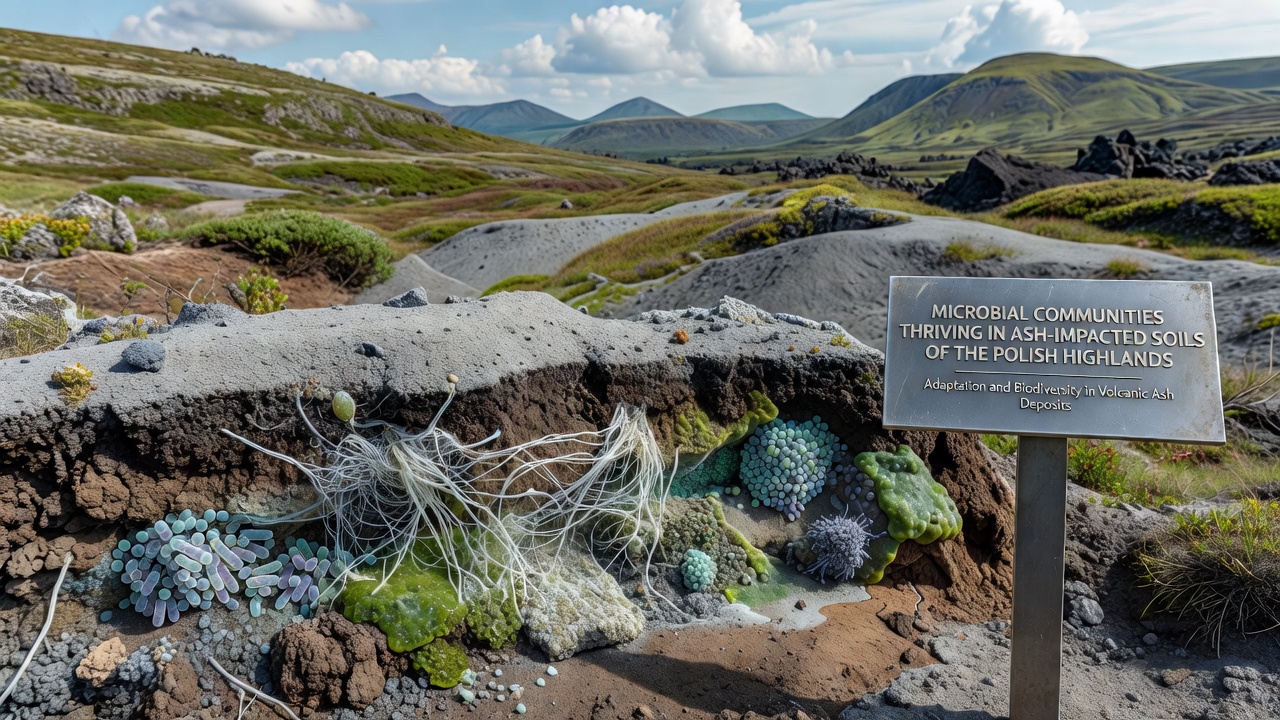
Researchers have documented distinct shifts in microbial populations across ash-affected zones in the Polish Highlands, where volcanic and industrial ash deposits alter soil chemistry and create new ecological niches. These changes drive adaptations among bacteria, fungi, and archaea that process elevated mineral levels while maintaining nutrient cycles essential for surrounding ecosystems. Data from field surveys indicate that ash layers often raise soil pH, which favors alkaliphilic species over acid-tolerant ones that dominate nearby unaffected terrain.
Studies conducted in the Sudetes and Carpathian foothills show that ash deposition supplies potassium, calcium, and phosphorus in forms that certain microbes can mobilize rapidly. Actinobacteria and Firmicutes frequently increase in abundance within months of ash input, while some Proteobacteria decline until they develop tolerance mechanisms. Observers note that these patterns emerge consistently across sites with similar ash thickness and composition, suggesting predictable responses tied to mineral availability rather than random variation.
Soil Chemistry Changes and Microbial Responses
Ash particles introduce soluble salts that modify electrical conductivity and water retention, conditions that select for microbes equipped with osmoprotectant pathways. In turn, these organisms release organic acids and enzymes that weather ash minerals further, releasing additional nutrients into the soil solution. Research indicates that fungal hyphae play a central role in binding ash particles into stable aggregates, which improves aeration and supports deeper root penetration by local vegetation over time.
One investigation tracked communities before and after ash events, revealing that diversity indices dropped initially yet recovered within two growing seasons as specialized taxa filled vacated functional roles. Metagenomic analyses highlight genes associated with sulfur oxidation and metal resistance that become enriched in ash-impacted profiles, reflecting selection pressures unique to these substrates. Such genetic shifts occur alongside measurable increases in microbial biomass carbon, demonstrating that the communities do not merely persist but actively process the new material.
Seasonal Dynamics Observed in Highland Sites
Seasonal temperature swings in the Polish Highlands amplify differences between ash-covered and reference soils. During spring thaw, microbial respiration rates in ash layers rise faster than in adjacent areas because the added minerals buffer against cold-induced slowdowns. Summer drought periods then favor spore-forming bacteria that survive desiccation within ash matrices, while autumn rains leach excess salts and allow broader recolonization by less tolerant groups. These cycles repeat annually, gradually homogenizing the upper soil horizon as ash integrates with native material.
Long-term monitoring stations established across multiple catchments record that nitrogen-fixing bacteria maintain steady populations despite pH fluctuations, likely because ash supplies molybdenum that serves as a cofactor in nitrogenase enzymes. This functional stability supports plant recovery even when overall community composition continues to evolve. Data collected through 2025 illustrate gradual convergence between ash-impacted and control sites, although full restoration of pre-ash profiles remains incomplete after a decade in the thickest deposits.
Research Methods and Emerging Findings
Scientists combine 16S rRNA sequencing with phospholipid fatty acid profiling to distinguish live microbial fractions from relic DNA preserved in ash. Isotope tracing experiments further demonstrate that microbes incorporate carbon from ash-derived carbonates at measurable rates, confirming active metabolism rather than passive presence. Parallel laboratory microcosms replicate field conditions and isolate individual taxa that accelerate ash weathering under controlled pH and moisture regimes.
Upcoming presentations scheduled for September 2026 at regional soil science meetings will present expanded datasets from additional highland transects, including comparisons with ash deposits in other European mountain ranges. These contributions build on earlier work published through the European Soil Data Centre and complement findings from collaborative projects involving Canadian research groups focused on similar post-deposition recovery processes. The combined records allow modelers to project how future ash inputs might alter microbial services such as carbon sequestration and contaminant attenuation across the region.
Interactions with Vegetation and Broader Ecosystems
Microbial activity in ash layers influences phosphorus availability for highland grasses and shrubs that colonize disturbed patches. Certain mycorrhizal fungi form associations that enhance host uptake of ash-mobilized nutrients, creating feedback loops that stabilize slopes against erosion. Invertebrate communities respond indirectly as microbial biomass increases, supplying food resources that support detritivore populations and accelerate litter breakdown. These cascading effects illustrate how belowground communities shape aboveground recovery trajectories without requiring direct intervention.
Conclusion
Collective evidence from multiple monitoring programs establishes that microbial communities in Polish Highland soils respond to ash inputs through predictable taxonomic and functional adjustments that sustain essential biogeochemical processes. Continued observation through 2026 and beyond will clarify the pace of community stabilization and inform management approaches that preserve these adaptive capacities across similar landscapes.